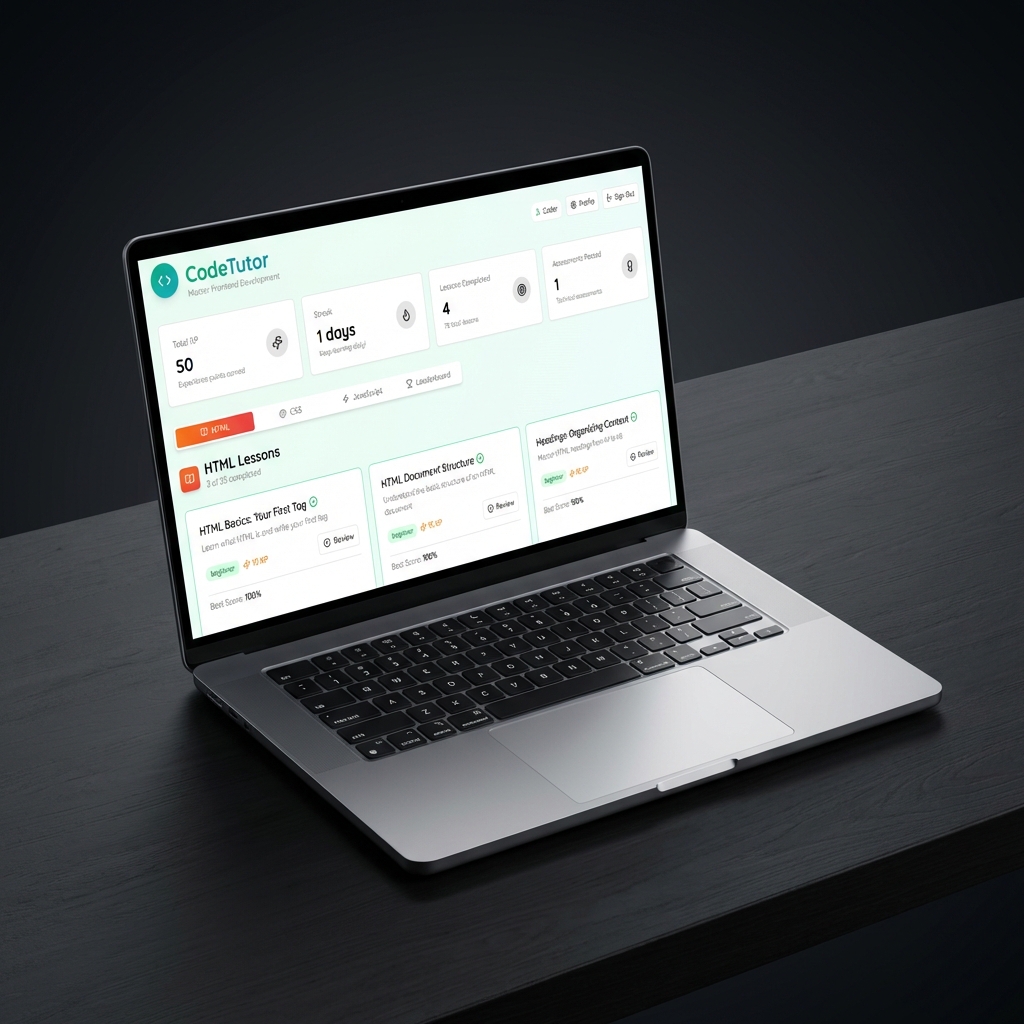
Coding Tutor
An interactive learning platform designed to bridge the gap between theory and practice in software engineering.
Technologies
Client
Confidential
Year
2024
Role
Lead Frontend Developer
Project Overview
Coding Tutor is an interactive learning platform designed to bridge the gap between theoretical knowledge and practical application in web development. The project explores how educational technology can make programming concepts more accessible through hands-on, guided learning experiences that adapt to individual learning paces.The primary goal was to create a platform where aspiring developers can learn HTML, CSS, and JavaScript through active practice rather than passive consumption. The interface prioritizes clarity and progressive disclosure, introducing concepts incrementally while providing immediate feedback on exercises. This approach reduces the cognitive load typically associated with learning to code and helps maintain learner motivation through visible progress.Built with Next.js and modern web technologies, the platform demonstrates scalable EdTech architecture where content can be easily updated and expanded. The application uses interactive code editors, real-time validation, and visual demonstrations to help learners understand how code translates to rendered output. Each lesson is structured to build upon previous knowledge, creating a coherent learning pathway from foundational concepts to more advanced techniques.Accessibility was central to the design, ensuring that learners of varying abilities and technical backgrounds can engage with the content effectively. The platform employs clear typography, logical information hierarchy, and keyboard navigation support. The content uses plain language explanations alongside technical terminology, helping learners gradually build their technical vocabulary while maintaining comprehension.
Challenge
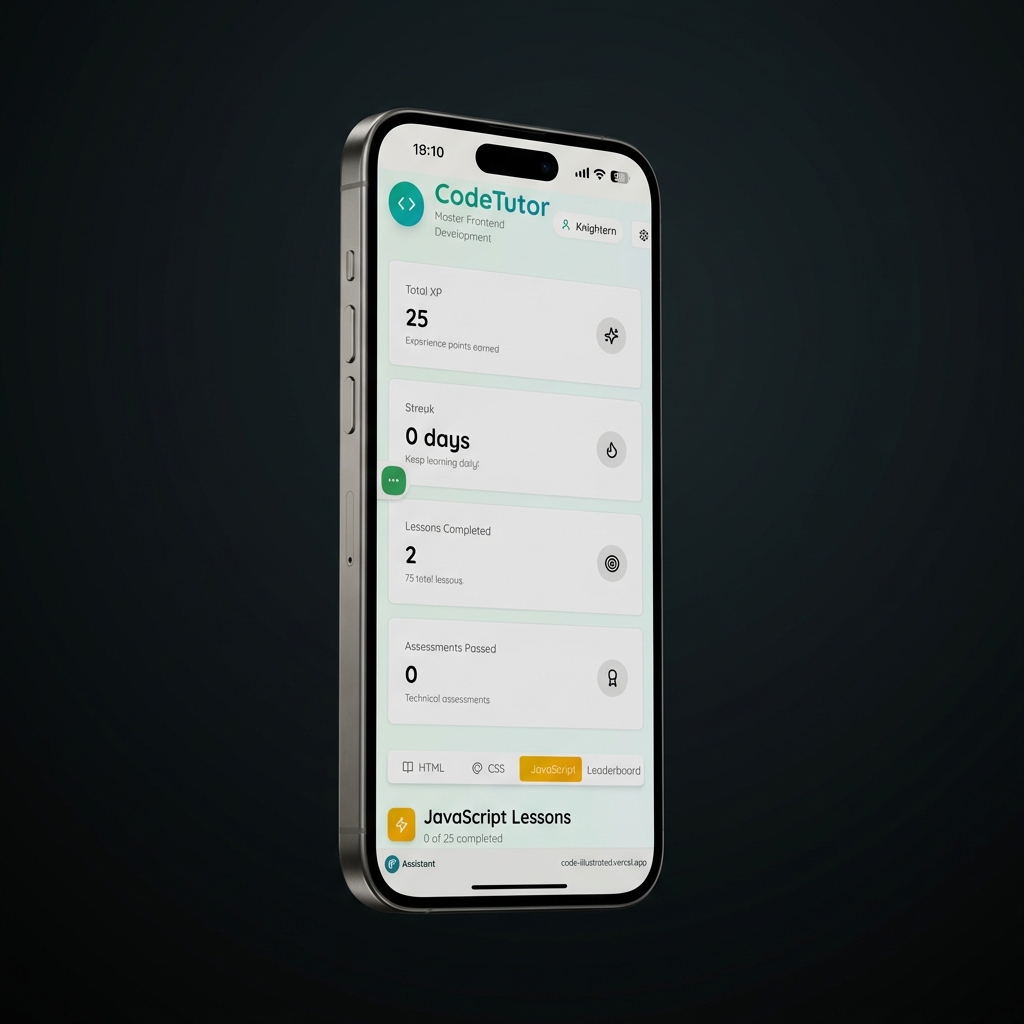
Designing an educational platform that makes programming accessible to complete beginners while maintaining engagement through multiple learning sessions. The challenge included creating interactive coding exercises that provide meaningful feedback, structuring curriculum progression that prevents learners from feeling overwhelmed, and building a responsive interface that works equally well on desktop and mobile devices where learners might practice on-the-go.
Solution
Implemented an interactive learning environment using Next.js with integrated code editors that provide real-time syntax highlighting and validation. Created a modular curriculum structure with bite-sized lessons, practical exercises, and immediate visual feedback loops that demonstrate the relationship between code and output. Developed a responsive component architecture with Tailwind CSS that ensures consistent learning experiences across devices, while incorporating progress tracking and achievement systems to maintain learner motivation throughout their educational journey.
Mobile Experience
Fully responsive design optimized for a seamless experience across all mobile devices, ensuring your brand looks perfect on every screen.